🧶 Beautiful ✨ Detailed 💝 Adorable

Hedwig the Snowy Owl Amigurumi Pattern

Hedwig the Snowy Owl Amigurumi Pattern
4.9★Rating
3-5 HoursTime Needed
3.8KMade This
✂️

Intermediate Level

Ideal for those with basic crocheting experience, featuring slightly more advanced stitches and techniques to expand your skills.

⏱️

Quick Craft

Fits nicely into a free afternoon — 2 to 5 hours of focused, enjoyable crocheting.

🐰

Whimsical Buddy

Playful characters full of personality, designed to spark imagination and become cherished playtime favorites.

About This Hedwig the Snowy Owl Amigurumi Pattern

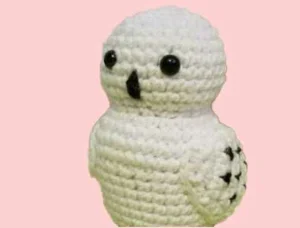
Hedwig the Snowy Owl Amigurumi Pattern crochet pattern - detailed view

This owl makes a genuinely thoughtful handmade gift — small enough to tuck into a card box, detailed enough to impress anyone who receives it. It looks beautiful on a bookshelf next to a favorite novel series.

Why You'll Love This Hedwig the Snowy Owl Amigurumi Pattern

Honestly, what got me was the construction. I've made plenty of amigurumi where the head and body are separate and you spend forever trying to get them lined up right — this one skips all of that. The whole thing grows as one piece and you just kind of watch it take shape, round by round. And that front-loop trick for the chest? It creates this little shelf that looks so intentional and professional. I also loved how forgiving the eye placement is — the pattern actually tells you off-center looks better, and it really does. That takes so much pressure off.

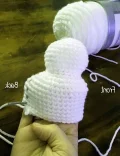
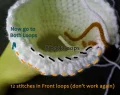
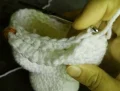
Hedwig the Snowy Owl Amigurumi Pattern step 1 Hedwig the Snowy Owl Amigurumi Pattern step 2 Hedwig the Snowy Owl Amigurumi Pattern step 3 Hedwig the Snowy Owl Amigurumi Pattern step 4

Switch Things Up

I have a soft spot for patterns that seem simple on the surface and then quietly teach you something new halfway through. This owl is exactly that kind of project.

When I first looked at it, I thought — okay, round body, two wings, done. But then Round 24 showed up and I had to slow way down. That front-loop-only technique to create the chest shelf? I had to read it three times, look at the photo, read it again, and then just trust my hook. And when it actually worked — when that little chest puff formed exactly the way it was supposed to — I felt genuinely proud of myself. That's the best part of making amigurumi, honestly. The tiny construction victories.

One thing I'd suggest: mark the front of the body early. I mean the moment you can tell which side will be the chest, drop a stitch marker or tie a little scrap of yarn there. I didn't do this on my first try and spent a confused few minutes after Round 23 trying to figure out where to put the eyes. Marking early makes everything flow.

For color variations — this pattern was clearly written with Hedwig in mind, but it's honestly a perfect blank canvas. I've been thinking about making one in a soft grey with white speckles to go on my desk, and maybe a warm tawny brown for a barn owl version. If you want to do multi-color wings, just keep the main body white and change the wing yarn. The construction doesn't change at all.

The beak embroidery sounds intimidating but it's genuinely just a few wraps of black yarn. Don't overthink it — the imperfection is part of the charm.

Common Mistakes & How to Fix Them

✗ Losing track of the front versus back of the body before placing the safety eyes — once you're past Round 23 the opening starts to close, so identify the front chest panel early and mark it with a scrap of yarn so you don't install the eyes on the wrong side.✗ Working Round 24 incorrectly by forgetting to switch back to both loops partway through — the round starts in FLO for the first 8 increases, then shifts to both loops for the decreases and remaining stitches. Missing that switch will throw off the chest shaping completely.✗ Skipping the unworked back loops from Round 24 when starting Round 25 — those 8 leftover loops are where the round begins, and if you miss them the chest flap won't form properly. Count them before you start.✗ Attaching the wings too high on the body — the bottom edge of each wing should sit parallel with the owl's base. Pinning both wings in place and stepping back to check symmetry before sewing saves a lot of unpicking later.✗ Not securing the black beak yarn firmly enough — because you're wrapping around just 3 or 4 times over a couple of rows, the beak can loosen over time if the yarn tail isn't woven in from multiple directions. Go back through the same path twice before trimming.✗ Rushing the color pull-through technique on the wings without carrying the unused yarn properly — if you drop the white while working the black stitches instead of carrying it, the wrong side gets lumpy and the tension becomes uneven, which shows even after the wing is sewn down.

Hedwig the Snowy Owl Amigurumi Pattern

There's something so satisfying about crocheting a round little owl that actually looks like an owl — and this pattern nails it. The body and head are worked as one continuous piece, which means no awkward seaming between the two main parts. You'll use a clever front-loop-only technique to create that signature chest puff, and the wings come together in rows with charming black accent stitches that mimic real feather markings. Whether you're making this for a shelf, a gift bag, or just because you needed a new hook project this weekend — you're going to love how this one turns out.

Intermediate 3-5 Hours

Materials Needed for Hedwig the Snowy Owl Amigurumi Pattern

— Main Fabric

  • 01
    White worsted weight yarn (size 4) — the main yarn used for the entire body and both wings
  • 02
    A small quantity of black yarn for the wing feather accents and the embroidered beak

— Tools Required

  • 01
    Size G/6 (4.25mm) crochet hook
  • 02
    2 black safety eyes, sized between 8mm and 12mm (10mm recommended)
  • 03
    Tapestry or yarn needle for sewing and weaving in ends
  • 04
    Scissors
  • 05
    Polyester fiberfill stuffing
  • 06
    Stitch marker or scrap yarn to track rounds

Progress Tracker

0% Complete

— 1. Body & Head (worked in continuous rounds) :

Info :

The entire owl — head and body — is crocheted as one continuous piece worked in spiral rounds without joining. Use a scrap of yarn as a stitch marker to keep your place. Do not join at the end of each round.

Round 1 :

Start with MR, work 6 SC into the ring. (6)

Round 2 :

2SC in every stitch around. (12)

Round 3 :

*SC, 2SC* — repeat from * to * around. (18)

Round 4 :

*SC 2, 2SC* — repeat from * to * around. (24)

Round 5 :

*SC 3, 2SC* — repeat from * to * around. (30)

Round 6 :

SC in every stitch around. (30)

Round 7 :

SC in every stitch around. (30)

Round 8 :

SC in every stitch around. (30)

Round 9 :

SC in every stitch around. (30)

Round 10 :

SC in every stitch around. (30)

Round 11 :

*SC 2, DEC* — repeat from * to * around, then SC in the last 2 stitches. (23)

Round 12 :

*SC 5, DEC* — repeat from * to * around, then SC in the last 2 stitches. (20)

Round 13 :

*SC, 2SC* — repeat from * to * around. (30)

Round 14 :

*SC 2, 2SC* — repeat from * to * around. (40)

Round 15 :

SC in every stitch around. (40)

Round 16 :

SC in every stitch around. (40)

Round 17 :

*SC, 2SC* — repeat from * to * a total of 3 times. SC in the next 12 stitches. *DEC, SC* — repeat from * to * a total of 4 times. SC in the last 10 stitches. (39)

Round 18 :

SC in every stitch around. (39)

Round 19 :

SC in every stitch around. (39)

Round 20 :

*SC 2, DEC* — repeat from * to * a total of 2 times. SC in every remaining stitch. (37)

Round 21 :

*SC, DEC* — repeat from * to * a total of 2 times. SC in every remaining stitch. (35)

Round 22 :

SC in every stitch around. (35)

Round 23 :

SC in every stitch around. (35)

Info :

At this point you should be able to identify the front chest of the owl. Before continuing, insert the safety eyes through to the inside — aim for around Round 7 on the head section, placing them roughly 5 stitches apart. Slightly off-center placement looks more natural, as if the owl is turning its head. Also embroider the beak now while you can still reach inside: thread black yarn onto your needle, position it centered below the eyes in the same row, and wrap straight downward over 2 rows, going around 3 to 4 times. Fasten off securely.

Round 24 :

Working in FLO: *SC, 2SC* — repeat from * to * a total of 4 times. Switch to both loops for the rest of the round: SC in next 8, DEC 6 times, SC in last 7. (33)

Info :

After Round 24, you'll have 8 unworked back loops left from that round — these form the base of the next round. There will also be 12 front loops that were worked; do not return to those.

Round 25 :

Begin in the 8 unworked back loops from Round 24, then continue through both loops of the remaining stitches: *SC 3, DEC* — repeat from * to * around. SC in last 4. (24)

Round 26 :

*SC 2, DEC* — repeat from * to * around. (18)

Info :

Add polyester stuffing now, before the opening gets too small to work with comfortably.

Round 27 :

*SC, DEC* — repeat from * to * around. (12)

Round 28 :

DEC in every stitch around. (6)

Info :

Fasten off, leaving a long yarn tail. Use it to sew the remaining hole shut. Add any final stuffing if needed, then weave in all ends.

— 2. Left Wing (worked in rows) :

Info :

Wings are worked flat in rows. Each row ends with CH 1 and turn. The black feather markings can be added two ways: (1) embroider V-shaped specks with a needle and black yarn after the wing is complete, or (2) use a black pull-through technique as you go — insert your hook into the stitch, yarn over with black, pull through, then yarn over with white and pull through to finish the SC. Carry the unused color along the wrong side between stitches. The wrong side will face the owl body once sewn on, so any untidy color changes won't show.

Info :

CH 3 to begin the left wing.

Row 1 :

SC in the 2nd chain from hook, SC in next chain. (2)

Row 2 :

2SC, 2SC. (4)

Row 3 :

2SC, SC, SC, 2SC. (6)

Row 4 :

SC across — work 2 black pull-through stitches spaced out across the row. (6)

Row 5 :

2SC in first stitch, SC in last 5. (7)

Row 6 :

SC 6, 2SC in last stitch — work 3 black pull-through stitches evenly spaced. (8)

Row 7 :

SC across. (8)

Row 8 :

SC across — work 4 black pull-through stitches evenly spaced. (8)

Row 9 :

DEC, DEC, SC in last 4. (6)

Row 10 :

SC 4, DEC — work 2 black pull-through stitches. (5)

Row 11 :

DEC, DEC, SC in last stitch. (3)

Row 12 :

SC across — work 1 black pull-through stitch. (3)

Row 13 :

SC3TOG. (1)

Row 14 :

SC. (1)

Row 15 :

SC evenly around the entire outer edge of the wing, then SS to the first SC. Fasten off, leaving a long tail for sewing.

— 3. Right Wing (worked in rows) :

Info :

The right wing mirrors the left wing. Same black pull-through stitch counts per row apply. CH 3 to begin.

Row 1 :

SC in the 2nd chain from hook, SC in next chain. (2)

Row 2 :

2SC, 2SC. (4)

Row 3 :

2SC, SC, SC, 2SC. (6)

Row 4 :

SC across — work 2 black pull-through stitches spaced out across the row. (6)

Row 5 :

SC 5, 2SC in last stitch. (7)

Row 6 :

2SC in first stitch, SC in last 6 — work 3 black pull-through stitches evenly spaced. (8)

Row 7 :

SC across. (8)

Row 8 :

SC across — work 4 black pull-through stitches evenly spaced. (8)

Row 9 :

SC 4, DEC, DEC. (6)

Row 10 :

DEC, SC in last 4 — work 2 black pull-through stitches. (5)

Row 11 :

SC, DEC, DEC. (3)

Row 12 :

SC across — work 1 black pull-through stitch. (3)

Row 13 :

SC3TOG. (1)

Row 14 :

SC. (1)

Row 15 :

SC evenly around the entire outer edge of the wing, then SS to the first SC. Fasten off, leaving a long tail for sewing.

Assembly Instructions

  • Before closing the body, insert both safety eyes through the fabric at approximately Round 7 of the head section, positioning them around 5 stitches apart and slightly off-center to give the owl a natural sideways glance. Secure the backings firmly from the inside.
  • While the body opening is still accessible after Round 23, embroider the beak with black yarn: thread onto a tapestry needle, anchor the yarn centered between the eyes on the same row they sit, then wrap straight downward over 2 rows, going around 3 to 4 times to build up a small beak shape. Tie off and weave in the tail.
  • After Round 26, fill the body with polyester stuffing before the opening becomes too tight. Add enough to give the owl a firm, round shape without distorting the stitches.
  • Complete Rounds 27 and 28 to close the body down to 6 stitches, then use the yarn tail to sew the remaining gap shut. Weave in all ends on the body.
  • Complete both wings including the border round, leaving long tails. Line up the bottom straight edge of each wing so it runs parallel with the base of the owl body — one wing on each side — and pin in place before sewing.
  • Sew each wing firmly to the body using the long yarn tails and a tapestry needle, stitching through several anchor points so the wings lie flat and don't sag forward or backward. Weave in all remaining ends.

Important Notes

  • 💡This pattern is worked in continuous spiral rounds — there is no slip stitch join at the end of each round. Move your stitch marker up each round so you always know where one round ends and the next begins.
  • 💡Round 24 is the trickiest round in the whole pattern — the first section is worked in FLO only, then you switch back to both loops for the decreases and the remaining stitches. Read it through twice before starting it.
  • 💡Install the safety eyes before the body is fully closed — once you're past Round 26, the opening is too small to get your hand inside to secure the backings. Don't skip this step thinking you'll do it later.
  • 💡The black feather markings on the wings can be embroidered after the fact if the pull-through color technique feels fiddly — both methods produce a similar look, so use whichever feels more comfortable for your skill level.
  • 💡When stuffing, go firmer than you think you need to. A lightly stuffed owl will lose its round shape over time, especially around the head, which doesn't have a separate structure to support it.
  • 💡For the wings, the wrong side faces the owl body once sewn on — so don't stress about the appearance of your color carry or any untidy pull-through stitches on that side. Focus on keeping the right side (outward-facing) clean and even.

By the time you sew on those last little wings, you'll have a completely handmade snowy owl sitting in your palm — round, plump, and ridiculously charming. This pattern is the kind you finish in one sitting and immediately want to make again in a different color. Brown yarn turns it into a barn owl. Tan and cream makes a great horned owl. The construction is so satisfying once you understand how the head and body flow together, and that front-loop chest trick will become one of your favorite shaping techniques. Grab your hook, put on something good to watch, and enjoy every round. 🧶✨
You ask,

we answer.

FAQs

Can I make this owl with a different yarn weight?

You can, but the finished size will change. This pattern is written for worsted weight (size 4) with a 4.25mm hook, which produces an owl roughly 4–5 inches tall. Switching to bulky yarn will give you a noticeably larger bird, while DK weight will make a slightly smaller, denser one. Just make sure your fabric isn't too open or the stuffing will show through.

The stitch count after Round 11 seems low — is that right?

Yes, it's intentional. Round 11 brings you down to 23 stitches, which creates the narrow neck between the head and body. Rounds 13 and 14 then increase back out to form the wider body. The jump in and out of stitch count is what gives the owl its distinctive round-headed shape.

I'm confused by Round 24 — can you clarify what FLO means here?

In Round 24, you start the increases by crocheting into the front loop only of each stitch — this leaves the back loop free, which becomes the starting point for Round 25. Partway through Round 24 (after the 8 FLO increases), you switch back to inserting your hook under both loops for the remaining decreases and single crochets. The pattern photo helps a lot — look for the diagram showing the 8 back loops and 12 front loops.

Do both wings have to have the black markings, or can I skip them?

The black accent stitches are entirely optional — a plain white wing looks lovely too, especially if you're giving this as a gift to someone who prefers a simpler look. If you do want the markings but find the pull-through technique tricky, just embroider small V shapes with a needle and black yarn after the wings are finished. Same effect, less fuss.

What size safety eyes work best for this pattern?

The pattern specifies 8–12mm black safety eyes. The designer used 10mm, which gives a bold, expressive look. Smaller eyes (8mm) will make the owl look more delicate and birdlike; larger eyes (12mm) push it toward a more cartoonish, kawaii style. Both work — it just depends on the look you're going for.