🧢 Beautiful ✨ Detailed πŸ’ Adorable

Pino the Rhino Amigurumi Pattern

Pino the Rhino Amigurumi Pattern
4.0β˜…Rating
3-5 HoursTime Needed
1.1KMade This
βœ‚οΈ

Intermediate Level

Ideal for those with basic crocheting experience, featuring slightly more advanced stitches and techniques to expand your skills.

⏱️

Quick Craft

Fits nicely into a free afternoon β€” 2 to 5 hours of focused, enjoyable crocheting.

πŸ₯

Charming Critter

Delightful animal designs with sweet details that capture the essence of your favorite woodland and farmyard friends.

About This Pino the Rhino Amigurumi Pattern

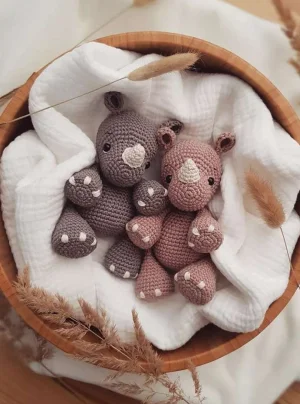
Pino the Rhino Amigurumi Pattern crochet pattern - detailed view

This little rhino makes the most thoughtful gift for a new baby or a dedicated animal lover. His sturdy, weighted feel makes him perfect for sitting on a bookshelf or being a cuddly friend for years to come.

Why You'll Love This Pino the Rhino Amigurumi Pattern

I honestly adore this pattern because it uses the 'join-as-you-go' method for the arms and legs. If you're like me and usually dread the final assembly phase where you have to sew everything together, you'll find it so satisfying to watch the limbs just grow right out of the body as you work!

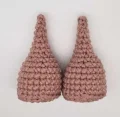
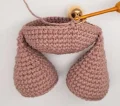
Pino the Rhino Amigurumi Pattern step 1 Pino the Rhino Amigurumi Pattern step 2 Pino the Rhino Amigurumi Pattern step 3 Pino the Rhino Amigurumi Pattern step 4

Switch Things Up

When I first saw Pino, I knew he was going to be a favorite. There's just something about those chunky legs and that sweet little face that makes him so lovable! One of the things I love most about this design is the 'join-as-you-go' limbs. If you've been crocheting amigurumi for a while, you know that sewing on four separate limbs and trying to get them perfectly symmetrical can be a real headache. By crocheting them directly into the body rounds, you get a much sturdier join and a way more consistent look.

While the pattern suggests earthy browns, don't feel like you have to stick to 'realistic' colors. I’ve seen versions of Pino in a soft dusty rose and even a mint green, and they look absolutely darling. If you're making this for a nursery, matching the yarn to the room's color scheme is a wonderful personal touch. One little tip from my own experience: when you're embroidering the nails, try to keep your tension consistent. If you pull too hard, they'll sink into the stuffing, but if they're too loose, they might snag. Just a gentle touch is all you need to give him those perfect little rhino toes!

Common Mistakes & How to Fix Them

βœ— When you reach Round 11 of the body, it's very easy to attach the legs facing the wrong way; ensure the starting 'joints' are at the back so he looks natural.βœ— Be careful not to stuff the very top of the arms and legs too firmly, or they will stick out stiffly from the body rather than hanging nicely at his sides.βœ— The horn has three increases that must be positioned on the top side to get that specific rhino curveβ€”if they end up on the bottom, the shape will look a bit off.βœ— If you mark the eye positions in Round 11 of the head but don't account for the shaping in the following rounds, they might end up looking asymmetrical once the head is stuffed.

Pino the Rhino Amigurumi Pattern

There is something so incredibly charming about a chunky amigurumi, and Pino the Rhino is the perfect example. You are going to love how his sturdy little body comes together, especially with the clever join-as-you-go limbs that save you a ton of sewing time later on. He has such a gentle, tubby personality that makes him an instant favorite for anyone who sees him. Grab your favorite earthy tones and let's get started on your new best friend!

Intermediate 3-5 Hours

Materials Needed for Pino the Rhino Amigurumi Pattern

β€” Main Fabric

  • 01
    About 56g of Aran or Worsted weight cotton yarn in a dark or light brown shade for the main body
  • 02
    Approximately 6g of off-white cotton yarn for the horn and the tiny nail details
  • 03
    A small scrap of white cotton yarn (about 30cm) for the eye highlights
  • 04
    Black embroidery thread for the eyebrows

β€” Tools Required

  • 01
    2.5 mm crochet hook (Size B) or a size that gives you a nice tight fabric with your chosen yarn
  • 02
    One pair of 8 mm black safety eyes
  • 03
    Blunt-tipped darning needle for weaving in ends
  • 04
    Sharp sewing needle and a pointed embroidery needle with a large eye
  • 05
    Stitch markers to keep track of your continuous rounds
  • 06
    High-quality fiberfill stuffing
  • 07
    Scissors
  • 08
    Straight pins to help with part placement before sewing

Progress Tracker

0% Complete

β€” 1. Legs (Make 2) :

Round 1 :

Start with 6 sc into a MR (6)

Round 2 :

Work 1 inc in every st around (12)

Round 3 :

Repeat (1 sc, 1 inc) 6 times (18)

Round 4 :

Repeat (2 sc, 1 inc) 6 times (24)

Round 5 :

Repeat (3 sc, 1 inc) 6 times (30)

Round 6 :

Work 30 sc through the BLO only (30)

Round 7-9 :

Work 30 sc (30)

Round 10 :

Repeat (3 sc, 1 dec) 6 times (24)

Round 11 :

Work 24 sc (24)

Round 12 :

Repeat (2 sc, 1 dec) 6 times (18)

Round 13-14 :

Work 18 sc (18)

Info :

Begin stuffing the leg with fiberfill up to Round 11. Keep the stuffing light so the leg retains a good shape without being too stiff.

Round 15 :

Repeat (1 sc, 1 dec) 6 times (12)

Round 16 :

Work 12 sc (12)

Round 17 :

Work 6 dec (6)

Round 18 :

Work 6 sc (6)

Round 19 :

Work 2 sc. Note: This is a partial round used to align the piece for closing (2)

Info :

Flatten the opening so the joints from rounds 5 and 6 are parallel. Adjust the stitch count if needed. Fold the top edges together and work 2 sc through both layers to close. Fasten off and weave in the tail.

β€” 2. Arms (Make 2) :

Round 1 :

Start with 6 sc into a MR (6)

Round 2 :

Work 1 inc in every st around (12)

Round 3 :

Repeat (1 sc, 1 inc) 6 times (18)

Round 4 :

Repeat (2 sc, 1 inc) 6 times (24)

Round 5 :

Work 24 sc through the BLO only (24)

Round 6-9 :

Work 24 sc (24)

Round 10 :

Repeat (2 sc, 1 dec) 6 times (18)

Round 11 :

Work 18 sc (18)

Round 12 :

Repeat (1 sc, 1 dec) 6 times (12)

Round 13-14 :

Work 12 sc (12)

Info :

Fill the arm with stuffing up to Round 12. Don't overstuff the top so it can lay flat against the body.

Round 15 :

Repeat (2 sc, 1 dec) 3 times (9)

Round 16-17 :

Work 9 sc (9)

Round 18 :

Repeat (1 sc, 1 dec) 3 times (6)

Round 19 :

Work 2 sc. Note: This is a partial round to align the fold (2)

Info :

Flatten the opening, ensuring the round 5/6 joints are parallel. Fold the top and work 2 sc across both layers to seal. Fasten off and hide the yarn tail.

β€” 3. Body :

Round 1 :

Start with 6 sc into a MR (6)

Round 2 :

Work 1 inc in every st around (12)

Round 3 :

Repeat (1 sc, 1 inc) 6 times (18)

Round 4 :

Repeat (2 sc, 1 inc) 6 times (24)

Round 5 :

Repeat (3 sc, 1 inc) 6 times (30)

Round 6 :

Repeat (4 sc, 1 inc) 6 times (36)

Round 7 :

Repeat (5 sc, 1 inc) 6 times (42)

Round 8 :

Repeat (6 sc, 1 inc) 6 times (48)

Round 9-10 :

Work 48 sc (48)

Info :

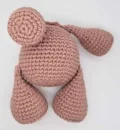
Place a marker at the front. Ensure the legs are attached with the right side facing forward and the joints at the back.

Round 11 :

Work 13 sc, attach 1st leg with 2 sc through both body and leg, 24 sc, attach 2nd leg with 2 sc through both body and leg, 7 sc (48)

Round 12-14 :

Work 48 sc (48)

Round 15 :

Repeat (6 sc, 1 dec) 6 times (42)

Round 16-17 :

Work 42 sc (42)

Round 18 :

Repeat (5 sc, 1 dec) 6 times (36)

Round 19 :

Repeat (4 sc, 1 dec) 6 times (30)

Round 20-21 :

Work 30 sc (30)

Round 22 :

Repeat (3 sc, 1 dec) 6 times (24)

Info :

Firmly stuff the body with fiberfill now.

Round 23 :

Repeat (2 sc, 1 dec) 6 times (18)

Round 24 :

Work 7 sc, attach 1st arm with 2 sc through both body and arm, 7 sc, attach 2nd arm with 2 sc through both body and arm (18)

Round 25 :

Repeat (1 sc, 1 dec) 6 times (12)

Info :

Flatten the neck opening and work 5 sc across both sides to close it. Fasten off and weave in your tail.

β€” 4. Head :

Round 1 :

Start with 6 sc into a MR (6)

Round 2 :

Work 1 inc in every st around (12)

Round 3 :

Repeat (1 sc, 1 inc) 6 times (18)

Round 4 :

Repeat (2 sc, 1 inc) 6 times (24)

Round 5 :

Repeat (3 sc, 1 inc) 6 times (30)

Round 6-9 :

Work 30 sc (30)

Round 10 :

Work 4 sc, repeat (1 inc, 1 sc) 6 times, then work 14 sc (36)

Info :

You can use yarn scraps to mark the eye positions in Round 11 now.

Round 11 :

Work 5 sc, place marker, repeat (1 inc, 2 sc) 5 times, 1 inc, place marker, 15 sc (42)

Round 12 :

Work 6 sc, repeat (1 inc, 3 sc) 6 times, then work 12 sc (48)

Round 13-14 :

Work 48 sc (48)

Info :

Insert the 8mm safety eyes into the positions you marked previously.

Round 15 :

Work 48 sc (48)

Round 16 :

Work 42 sc, then attach the head to the body by working 5 sc through both the head and the closed neck of the body, then 1 sc (48)

Round 17-19 :

Work 48 sc (48)

Round 20 :

Repeat (6 sc, 1 dec) 6 times (42)

Round 21 :

Work 42 sc (42)

Round 22 :

Repeat (5 sc, 1 dec) 6 times (36)

Round 23 :

Repeat (4 sc, 1 dec) 6 times (30)

Round 24 :

Repeat (3 sc, 1 dec) 6 times (24)

Round 25 :

Repeat (2 sc, 1 dec) 6 times (18)

Info :

Stuff the head thoroughly with fiberfill.

Round 26 :

Repeat (1 sc, 1 dec) 6 times (12)

Round 27 :

Work 6 dec (6)

β€” 5. Ears (Make 2) :

Round 1 :

Start with 6 sc into a MR (6)

Round 2 :

Work 1 inc in every st around (12)

Round 3 :

Work 1 ch, 5 hdc, work 2 dc into the next st twice, then 5 hdc (14)

Info :

Finish with a sl st in the next st. Leave a long tail for sewing. Fold the ear and sew the bottom two stitches together to create the curved shape.

β€” 6. Horn :

Round 1 :

Start with 6 sc into a MR (6)

Round 2 :

Work 6 sc (6)

Round 3 :

Repeat (1 sc, 1 inc) 3 times (9)

Round 4 :

Work 3 inc, then 6 sc (12)

Round 5 :

Work 12 sc (12)

Info :

Finish with a sl st and leave a long tail. Lightly stuff the horn before attaching.

Assembly Instructions

  • Sew the ears to the head at Round 17, centering them with 12 stitches visible between them.
  • Place the horn between Rounds 3 and 9 of the head, ensuring the side with the 3 increases is facing upwards for the correct curve.
  • Using black embroidery thread, stitch the slanted eyebrows over Round 13, making each one about 2 stitches long.
  • Create the eyelids by stitching twice over the top of the eye with body-colored yarn, then add a small white highlight to the bottom third of the eye.
  • Embroider four small nails onto each paw using off-white yarn, leaving 4 stitches between each nail.
  • For the tail, knot a 20cm length of yarn at the center back of the body on Round 9, then trim it to about 1cm.

Important Notes

  • πŸ’‘I highly recommend using the invisible decrease method for the shaping rounds to keep the fabric looking smooth and professional.
  • πŸ’‘When stuffing smaller pieces like the horn, use yarn scraps or remnants to prevent the fiberfill from pilling through the stitches.
  • πŸ’‘Always use pins to check the placement of the ears and horn before you start sewing; symmetry is key to getting Pino's expression just right.
  • πŸ’‘Use a stitch marker at the front of the body to ensure your limb placements are perfectly centered.
  • πŸ’‘If your tension is naturally loose, consider dropping down half a hook size to ensure no stuffing shows through the stitches.

I really hope you enjoy bringing Pino to life as much as I did! There’s something so rewarding about finishing those tiny details, like the embroidered nails and that cute little horn, that really makes his personality shine. Once you're finished, don't forget to give him a little squeezeβ€”he’s designed to be the perfect size for hugging. I can't wait to see the colors you choose for your own rhino family! Happy crocheting, and may your stitches always be even and your yarn never tangle! ✨🧢

You ask,

we answer.

FAQs

Can I use DK weight yarn instead of Aran?

You definitely can, but just keep in mind that Pino will turn out a bit smaller than the 16cm listed. Make sure to use a smaller hook (like a 2.0mm or 2.25mm) so your stitches stay tight enough to hold the stuffing.

What does 'crochet in the leg' mean in Round 11?

This is a join-as-you-go technique. You'll hold the flattened top of the leg against the body and insert your hook through both the leg and the body stitch at the same time, then complete your single crochet as usual.

My horn looks straight instead of curved, what happened?

Check Round 4 of the horn! Those 3 increases in a row are what create the curve. When you sew it on, make sure those increases are positioned on the top side of the horn.

How do I make the eyebrows look even?

I like to use pins to mark the start and end points of both eyebrows first. Step back and look at the face from a distance before you start embroidering to ensure they aren't lopsided.